Walled City of Kotor - Montenegro
Curtain Walls
Curtain Walls
.
 Kotor, Montenegro, curtain walls
.
Curtain walls; These extend as a total barrier, often in a broad perimeter around a castle, here going up the mountain as an escape for an entire town, there, in the back.
Why need such extensive wall structures apart from the main walled town. The separate curtain wall is a familiar sight in the Balkans, going up the mountains. The curtain wall was needed because of the location of the town, at roadways and ports invaders used through the years. Occupation after occupation. With mountains as a backdrop, the city could be better defended, but. Kotor still has been in many hands - warfare upon warfare.
Occupation history:
- Illyrian 300 BC or so (Old Greek),
- Roman 168 BC,
- Byzantine then until the 1100's,
- Serbian to the 1300's,
- then Hungary in the 1300's,
- then Bosnian at the end of the 1300's,
- Venetian in the 1400's as a voluntary transfer of protection against the Turks, and to 1797,
- then Austrian to 1805,
- Russian to 1807,
- French to 1813, temporary fight for independence, lost, and
- back to Austria to 1918,
- liberation after WWI,
- then the Germans,
- and liberation from Germany 1944.
- part of Yugoslavia,
- then part of Serbia after the breakup of Yugoslavia, and
- in 2006, independence from Serbia
Add to that plagues and earthquakes.
The city is over 2000 years old. No peace. There used to be an upper town and a lower town. See ://www.destination-montenegro.com/kotor-history.htm
Kotor - look closely at the mountain to see the curtain walls going up the side, another defense.
At Kotor, as in places in Croatia (especially Ston, see Croatia Road Ways, Ston post), you can see curtain walls going most all the way up a mountainside, with a large fortress at the top. These serve as another line of defense, if the the city walls are breached the population flees up the mountain. There is refuge there, better than below.
Kotor is a UNESCO World Heritage site. See whc.unesco.org/en/list/125; and thesalmons.org/lynn/wh-montenegro.
There are also palm trees, just as there are in the warm parts of Scotland even, and the old buildings. See the old town at www.photo-montenegro.com/home. Go further to these notations if that is helpful: php?akcija=rezpret&fKategorija=Kotor&fPodKategorija=Old+Town. Kotor was less damaged by invasions than many coastal towns, I understand. See www.matf.bg.ac.yu/konferencije/kotor/.
Getting around:
There are many ATM's, but you may find that only selected cards will work, and the money is not Euro. We ran into five currencies this trip - different in Croatia, Slovenia, Bosnia, Montenegro and Serbia. Some will accept Euro, but we preferred to use the country's cash and withdrew some for each day.
Credit cards.
Before you leave US: You should alert your credit card or debit card places that you will be in specific countries so they will not block your getting cash. We did that ahead of time, and still found that one card could not be used. Much fraud out there.


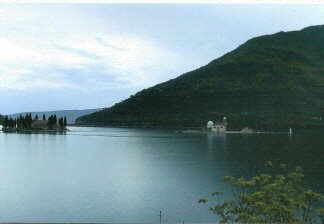 Kotor Bay, Montenegro, Our Lady of the Rock, Perast Islands; Island of St. George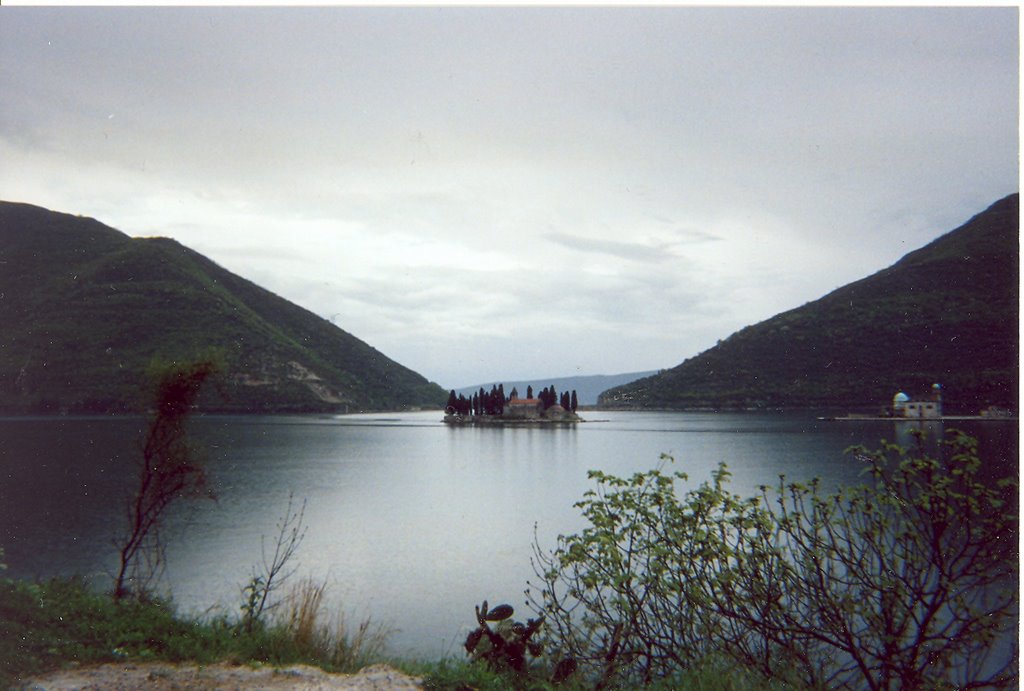
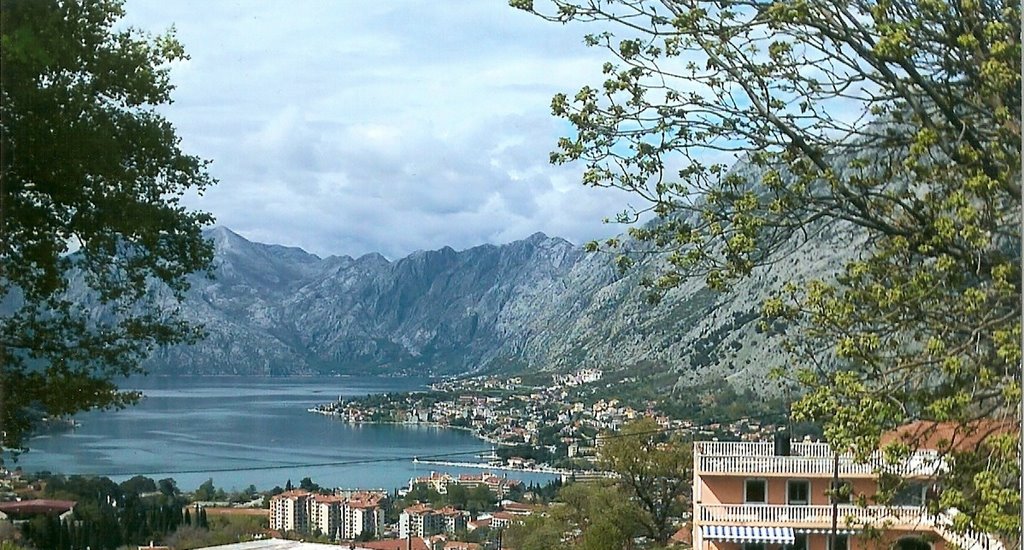 Kotor, Kotor Bay, fjord, Montenegro